
Teaching Through the Noise: A Retiring Teacher Looks Back, Forward, and Beyond
December 2025
When Michele began teaching high school English nearly three decades ago, classrooms felt quieter. The biggest distractions were passing notes, wandering attention, and the everyday drama of teenage life. Today, her students navigate a world of constant notifications, instant answers, and technologies she could not have imagined when she first stepped into teaching.
As she prepares to retire at the end of this school year, Michele is looking both backward and forward with thoughtful curiosity. In our conversation, we talked about what has changed, what has endured, and what it means to teach, and to learn, in a world that keeps evolving. We also explored the hopes she carries for her students, the challenges brought on by smartphones and AI, and the possibilities she is beginning to imagine for her own life beyond the classroom.
How long have you been a high school English teacher, and what originally drew you to the classroom?
I have been teaching for 26 years. My own kids were growing, and I found myself thinking about what else I wanted in my life beyond being a mom and a wife. I have always loved reading, and I believed deeply that books help young people make sense of the world. I also had three stepchildren who were teenagers, and I really connected with them. That combination led me to pursue a teaching certificate. I went back to school before my kids were even in grade school. Then my world changed overnight when I suddenly lost my husband and became a single mom.
Thankfully, I was already on my way to earning my teaching credentials. Once my youngest reached kindergarten, I applied for and was accepted into a high school English teaching position in a nearby town. The schedule worked well for my young family. It was daunting at first, but I felt like I was making a real impact, and that was incredibly rewarding.
Along the way, I picked up a phrase that became my mantra: Students will not remember what you taught them, but they will remember how you made them feel.
Over the years, what has brought you the most joy or been the most impactful in teaching young people?
Realizing the potential impact I have had on hundreds of students is deeply meaningful. I am constantly amazed by the resilience and strength of young people, especially those facing really difficult home lives. I have taught students who were homeless, whose parents were incarcerated, or whose parents never showed up for conferences. You overhear things students say to one another that can be heartbreaking. I once heard a student talking about how cruel her father’s wife was to her. Another student shared a song her father had written about her while he was in jail.
The things kids go through are often unbelievable, and yet they keep showing up. They are resilient. I have always tried to give students grace, knowing that what happens outside the classroom deeply affects what happens inside it. I remind them often that high school does not define the rest of your life. When kids find the thing that makes them tick, they will put in the time and effort. I have seen students lead social justice initiatives, volunteer at animal shelters, work with students with developmental disabilities, support food banks, and get involved in environmental and clean water programs. Their compassion and drive can be extraordinary.
Teaching has changed a lot over the decades. What shifts have you noticed in how students learn, write, or think?
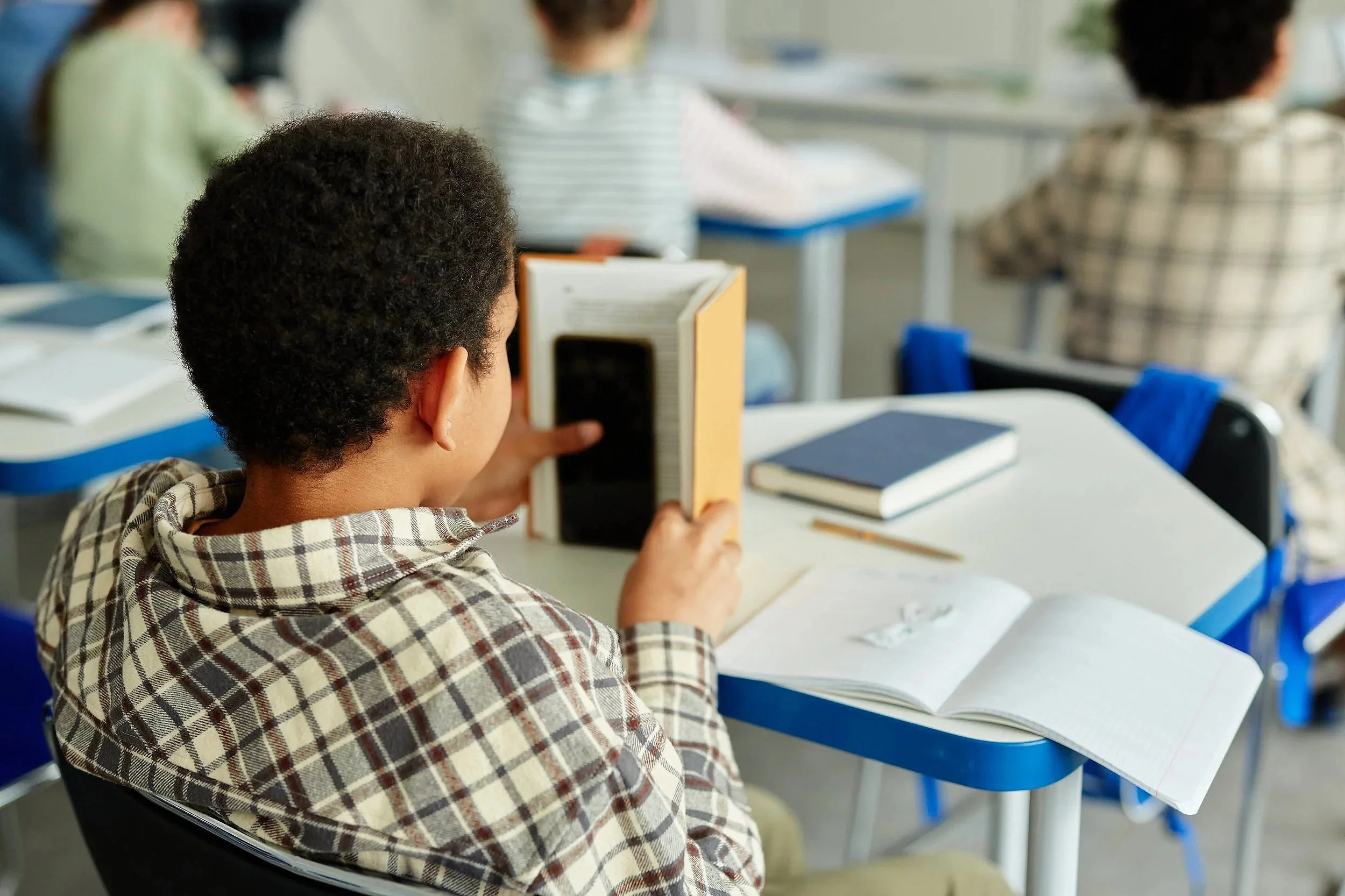
Students today are often disengaged from reading. They want fast answers and tend to skim rather than read deeply. I see a direct connection to technology, especially smartphones. Attention spans are shorter, and social media consumes so much of their focus. I worry about what this means long term. Without strong reading, writing, and critical thinking skills, will they be prepared to lead?
At the same time, I have seen an expansion of programs for students who are not college bound. Construction, cybertech, electrical, automotive, and career technical education programs have grown significantly over the last decade.
How did technology, even before AI, change your classroom?
Parents often worry about curriculum content, but in my experience, smartphones have been far more damaging. Poverty also plays a huge role. Phones hijack attention, and students experience real anxiety when they are disconnected – there’s a constant fear of missing out.
During the pandemic, technology became unavoidable. Students could not participate in school without devices, hotspots, and online platforms. Google Classroom exploded during that time, and students became even more immersed in their devices. It is not all bad. Students use technology for jobs and research, but it often does more harm than good. The addiction is real. New state policies aimed at limiting phone use in the classroom are beginning to roll out, though how enforceable they will be remains to be seen.
When did AI first enter your classroom, and how did you recognize it?
A few years ago, I noticed a shift in students’ formal writing. Sentence fluency, vocabulary, structure – it did not sound like a fourteen-year-old. My colleagues and I started to realize what we were seeing and were bracing for what was to come. AI does not write like a teenager. Once I realized what was happening, I had to figure out how to address it within my own classroom. AI use by students began in a very isolated way but, of course, has really exploded.
What challenges has AI created for you and your students?
Some students submit AI generated essays without even reading them first. It is usually obvious. I often give them a chance to rewrite if I can tell the work was not fully their own. As I approach retirement, I am not as invested in fully solving this problem. AI has advanced to the point where students can ask it to write like a fourteen-year-old, which makes detection harder. Still, after all these years, I can usually tell.
There is a lot of debate at conferences and professional development sessions, but no consensus. Leaders are still figuring it out. I will be watching how it unfolds, just from the sidelines.
Do you believe AI can be used responsibly by young people?
I am not sure. It reminds me of the early internet, full of promise and risk. I worry students will not learn foundational skills, but maybe the world will adapt in ways we cannot yet see. Not as many young people are going to college, and the definition of essential skills may change.
Have you seen any positive uses of AI?
I actually used AI myself to write a poem for practice ahead of a standardized state test. I've also used ChatGPT to make changes to suit the lesson, or the way I teach. I use it to find articles that meet specific criteria or to generate discussion questions. It has been a good tool that saves time, and I have the experience to know how to use it to augment, not replace, what I do. This idea is what I try to convey to my students – use AI to supplement work, not for the final product. I guess the future of AI in the classroom has to be about how to use it as a tool, not to fully create the end product.
How have you adapted your teaching in response to AI?
Honestly, I have not fully figured it out. A younger colleague is already navigating it more naturally. This year, AI use has been more prevalent than ever. For an upcoming exam, I am going old school and having students write in blue books. They will know the topic ahead of time and can research, but the writing itself will happen in class. It is my attempt to keep the work as authentic as possible. I am stressed about AI, but I’m doing what I can.
What do you hope parents and older adults understand about today’s classroom?
When I started teaching, I graded essays by hand. Then came computers. Then students had computers. Then smartphones. Now AI. The pace of change has been relentless. Students need to learn how to disengage from constant distraction. Not all learning is hands on or entertaining. Sometimes you have to be bored. Sometimes you just have to read or listen.
Parents can be skeptical of teachers, but teachers do not have time to invent problems. I have always respected parental concerns about reading material and provided alternatives when needed.
As retirement approaches, what emotions come up for you?
What is hitting me most is how much I will miss the discussions with students. I will miss reviewing To Kill a Mockingbird for example. It feels daunting to imagine not engaging with young people in this way.
There is relief too – relief from politics and administrative pressures. I will miss my colleagues deeply. My identity is so tied to being a teacher that I expect there may be a period of feeling adrift. But I am looking forward to life without bells. I do not want to be bound to someone else’s schedule.
What are you most looking forward to in retirement?
Sleeping in. Not waking up in the dark. Not driving in terrible weather. No grading essays. More travel. More reading. I have thought about teaching at the community college, but honestly, no. No more essays.
Listening to Michele reflect on her career is a reminder that education is not just about curriculum or tools, whether chalkboards, smartphones, or chatbots. It is about human connection, curiosity, and showing up for young people as they figure out who they are becoming.
Seeing Michele’s numerous awards, and hearing stories of former students who have reached out to her, even years later, to let her know how much she touched their lives and inspired their learning, is a testament to the quiet, lasting impact she has had. As Michele steps into her own next chapter, her perspective feels both grounded and unfinished, much like the world her students are inheriting.
It is a thoughtful place to leave a classroom, and an honest place to begin whatever comes next.