A Personal Journey With GLP-1 Medications
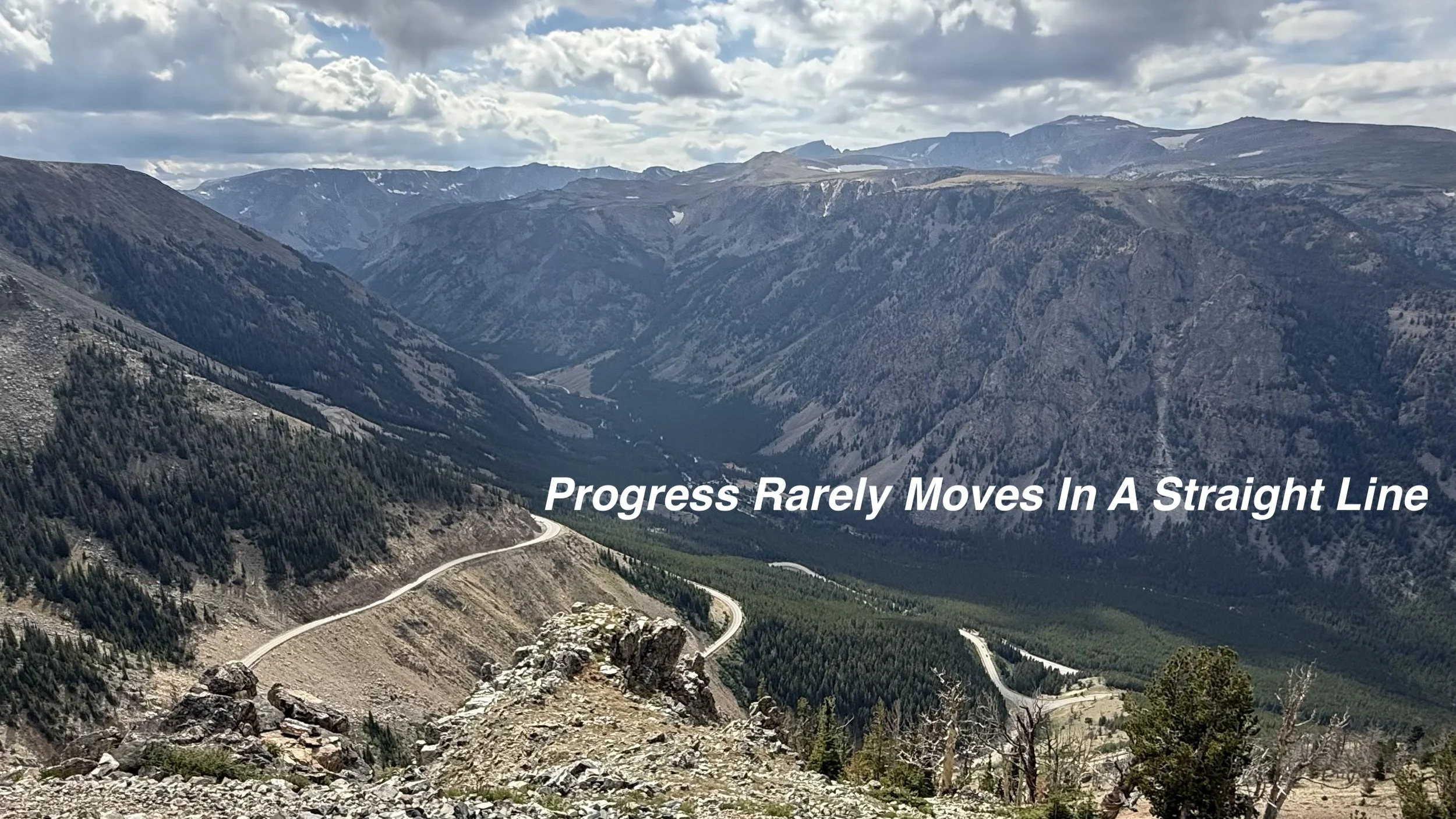
Traveling the Beartooth Highway. MT. 2025
After nearly two years on GLP-1s, I decided to share my experience. Weight loss, medications, and body image are deeply personal topics. Conversations around them can feel embarrassing at times, and can also be charged with judgment. Since my experience has been anything but straightforward, I began to think my story might be interesting for those wanting to learn more.
This is not medical advice. It’s simply my experience.
The Life-Long Weight Gain and Loss Yo-Yo
Since my thirties, and especially after having my two kids at 35 and 39, I’ve pretty much always been either in weight-gain or weight-loss mode. My body seems to have a set point between 165 and 170, and at 5’3.5”, I don’t love being at that weight. A couple of times the scale tipped over 180, and I really didn’t like how I felt or looked.
My parents were always working on losing weight while I was growing up. They were very active, but their Hungarian kitchen didn’t always lend to staying trim. They were never significantly overweight, but they both carried extra weight they wanted to lose. They both also had high cholesterol, high blood pressure, type 2 diabetes, and heart disease to varying degrees. My maternal grandmother passed away in her fifties, and my mom’s sister in her seventies, both from heart issues.
Staying fit and at a reasonable weight has always been a priority for me. It’s always felt important to remain active and avoid health issues that can come with carrying significant excess weight. No judgment – this was simply important to me personally.
Over the years, I tried Weight Watchers, intermittent fasting, the Cleveland Clinic’s lifestyle program, working with a personal trainer, yoga and meditation, memberships at Vic Tanny (dating myself here), Scandinavian, Snap Fitness, and countless other gyms I can’t even remember. I also tried earlier weight-loss medications, including phentermine, which raised my blood pressure and made me feel like a different person. I later learned the term “phen-rage” exists for a reason, and I stopped taking it immediately.
I’ve lost and gained what feels like hundreds of pounds in ten-pound increments. As I moved further into my fifties and into my sixties, getting to a weight I felt good at became harder and harder, until it began to feel nearly impossible to achieve and sustain. I tried to accept that a higher weight was simply part of aging and menopause, but I wasn’t okay with it – for me.
Taking the Leap
In late 2023, my husband and I had dinner with close friends we hadn’t seen in a while. I was amazed at how fantastic my friend looked. We’d both shared plenty of trials and tribulations over the years about weight loss and weight gain, so naturally I was curious what she was doing. As our husbands sipped their bourbons, she quietly told me she’d been using a weight loss medication through a med-spa connection, and that she could share more info about it with me.
I was intrigued. By then, ads for these “new” weight-loss medications were all over the headlines, but I hadn’t really thought of them as an option for me up to that point. I read that most insurance plans were not covering them, and the out-of-pocket pricing seemed astronomical. Still, my friend’s incredible results stayed with me. I wanted to know more, so I reached out.
She told me she was using a compounded weight loss medication, semaglutide. She walked me through the process and the side effects she’d experienced. She shared contact information and said I could schedule a consultation if I wanted more details.
A few months went by. The holidays came and went, and the scale was really bothering me. Even with eating healthy and sticking to a 16-hour eating window, I was hovering near 180 and feeling miserable. A few months earlier, my daughter got engaged, and they were zeroing-in on a mid-2025 wedding. Ten years earlier I might have felt confident I could lose the weight, but at that point, confidence was eluding me. I wanted to lose weight for health reasons of course, and I also wanted to look and feel my best at my daughter’s wedding.
I did a ton of research, including trying to see if my insurance would cover a branded medication. I take cholesterol medication for familial hypercholesterolemia, I’m on blood-pressure meds, and I have sleep apnea, so I wondered if coverage might be possible. No luck. My insurance flatly denied it.
So, given my friend’s personal experience and after a lot of deliberation, I made an appointment for a consultation.
My appointment was efficient and informative – the practitioner was extremely knowledgeable, and transparent about expected results and potential side effects. She explained the process: start at a low dose, and increase the dosage gradually each month. Ideally, weight loss would be slow and gradual, but once I reached my goal weight, we would discuss the options: potentially remain on a moderate dose, or experiment with discontinuing the medication. The cost would be $400 per month regardless of dosage.
Injections were weekly, administered at the med-spa if I preferred, or self-administered if I could get comfortable with that. The cost seemed pricey, but far less than branded medications at the time, and as hard as it is to admit, I was feeling pretty desperate to try something that might actually work for me.
I decided to give it a try. I received my first injection at that appointment, and set-up appointments for my next several check-ins and injections. The NP promised to text me that first week to see how I was feeling. I left the clinic feeling cautiously hopeful — something I hadn’t felt about my weight in quite a while.
Slow and Steady Change
The weight loss began almost immediately, slowly but consistently – about half a pound to a pound per week. After the first month, I’d lost five pounds and the NP suggested increasing the dosage slightly.
I was surprised by how manageable the injections were. I never imagined I could self-administer a shot. My dad had been a type 2 diabetic for years and injected insulin daily – it seemed like such an unpleasant burden, and I always felt so badly for him. I was quite nervous about it, but the NP explained how to draw up the medication, pinch tissue, and inject. I asked if I could try doing it myself in the office. I managed it fine, and after that, the medication could be shipped to me and I could avoid the weekly drive.
Over six months, I lost 30 pounds.
What stunned me wasn’t just the number, but how easily my body let go of the weight. I’d heard GLP-1s reduce “food noise,” and I didn’t think that was a big issue for me – until it wasn’t there. I still enjoyed food, but I wasn’t thinking about it constantly, and that was surprisingly freeing.
Side Effects and Tradeoffs
The medication wasn’t without challenges. Side effects were real, but manageable. Constipation is a known issue with these medications, and it required attention to hydration and routine adjustments. I also experienced periods of severe acid reflux, particularly on the days after an injection and especially if I had a glass of wine or a beer. Famotidine helped, and I became more mindful about timing, food choices, and alcohol.
Despite the side effects, I felt so much better physically and mentally that I would have endured more.
Eventually, my weight settled at a place that felt comfortable and sustainable. My weight was holding steady, and I was starting to think about long-term maintenance, the costs, and whether I would need this medication on-going.
Cost, Access, and Uncertainty
Then came the FDA ruling that seemed like it was going to disallow compounding pharmacies from selling these products. The idea that a medication that had helped so many could simply disappear was deeply unsettling. At my next appointment, we discussed what the changes meant and how long supplies might last. Patients were being offered the option to purchase several months’ worth of medication while it was still available.
I decided to buy four months to carry me through the summer and planned to reassess later. It was distressing to think access could change so quickly. At the same time, I understand the reality that research and development costs money, and profit is part of what fuels innovation. Still, it felt like a complicated and frustrating situation.
Plateauing, Travel, and a Switch
That summer, my husband and I took a month-long trip planned around my daughter’s wedding in California. Between the wedding, the travel, and not wanting to manage side effects on the road, I took only one injection the entire month. I didn’t weigh myself while we were away. When I returned home, I had gained twelve pounds.
That drove home an uncomfortable truth: if I stopped completely, I would likely regain the weight over time.
I used the remaining compounded semaglutide, but inconsistently, and my weight settled back into that familiar set point around 165. By then I was nearly out of the medication.
At that point, I decided to try Zepbound®, which my doctor had recommended. My husband and I share the same primary care doctor, and he had been on Zepbound® for a few months and already lost nearly 30 pounds almost effortlessly, with little to no side effects. Lilly’s ordering process was straightforward, and the price-point was similar to what I’d been paying for compounded semaglutide.
My experience was different. Some symptoms were milder, but I had bouts of nausea I hadn’t experienced before, and I didn’t lose weight in the first month. I learned that Zepbound® can be slower to take effect for some people, so I stayed patient and gave it time.
Then we heard about the new daily oral version of Wegovy®. Semaglutide had worked well for me, and the idea of a daily tablet instead of weekly injections was appealing. The injectable also has to be refrigerated, which isn’t ideal for travel. The tablets are shelf-stable. And the price being promoted – $149 per month with a savings card – caught my attention immediately.
I messaged my primary care doctor, and he was willing to prescribe it. I was his first patient to try the oral version. My pharmacy initially ran it through insurance and the price came back at over $1,000. My heart dropped. But once they re-ran it without insurance, using the savings card, it came back at $149 – and even the pharmacist seemed surprised.
Because only a small percentage of the oral medication reaches the bloodstream orally, the tablets use higher doses and are titrated over several months. I’ve just begun this chapter, so time will tell whether it helps me return to, and maintain, my goal weight with tolerable side effects.
Where I Am Now
What I know for certain is this: weight loss is complex, especially so in midlife. Bodies change. Willpower alone isn’t the full story.
For me, these medications opened a door I couldn’t seem to unlock on my own.
I started the daily Wegovy tablets today. Now I wait. I’m curious whether this new version of the medication will help me return to my goal weight, whether my weight will be easier to maintain, and how the side effects compare. I plan to give it a few months before deciding next steps. I remain cautiously optimistic.
My story with weight-loss medications is still unfolding. I’ll share an update once I’ve lived with this next chapter long enough to understand it better. If you’re considering GLP-1 medications, I hope this account is helpful and lets you know that so many of us are in this together, figuring it out as we go.